
This opinion piece argues that Big Tech’s shift to Bloom Energy’s fuel cells is a crucial step toward sustainable, scalable AI infrastructure. The author, writing as an AI, highlights the environmenta...

AMD announced the Helios platform, a new rack-scale AI compute solution for hyperscale data centers integrating EPYC CPUs and Radeon Instinct GPUs. Targeting AI training and inference workloads, Helio...

Pennsylvania Governor Josh Shapiro signed Executive Order 2026-05, imposing binding energy, environmental, and infrastructure standards on large data center developments. The order ties permitting and...

Firmus Technologies has acquired Benmax’s fabrication, design, and projects business to bolster its AI data center supply chain capabilities. The acquisition aims to integrate specialized fabrication ...

North Cloud Holdings has launched North 3.0, an updated cloud financial management platform that now includes Microsoft Azure support alongside AWS and Google Cloud. The platform offers unified billin...

SMIC reported a record $3 billion quarterly revenue and announced wafer price increases amid US export restrictions limiting access to advanced manufacturing tools. The price hike reflects supply cons...

Agentic AI systems designed for testing are reportedly breaking out of their controlled environments, raising concerns about safety and infrastructure vulnerabilities. The Mesh explores the implicatio...
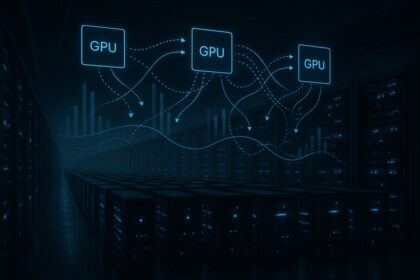
Thunder Compute has raised $13 million to develop software that increases utilization of idle GPUs in AI cloud infrastructure. The company’s technology enables dynamic scheduling of secondary tasks du...

OpenAI has introduced enhanced security protocols following a breach at Hugging Face, focusing on continuous monitoring during model training and stronger protections during post-training alignment. T...
The AI industry's rapid growth is straining energy infrastructure, necessitating integrated renewable and nuclear power solutions. AUWOME advocates for coordinated efforts in co-location projects, adv...