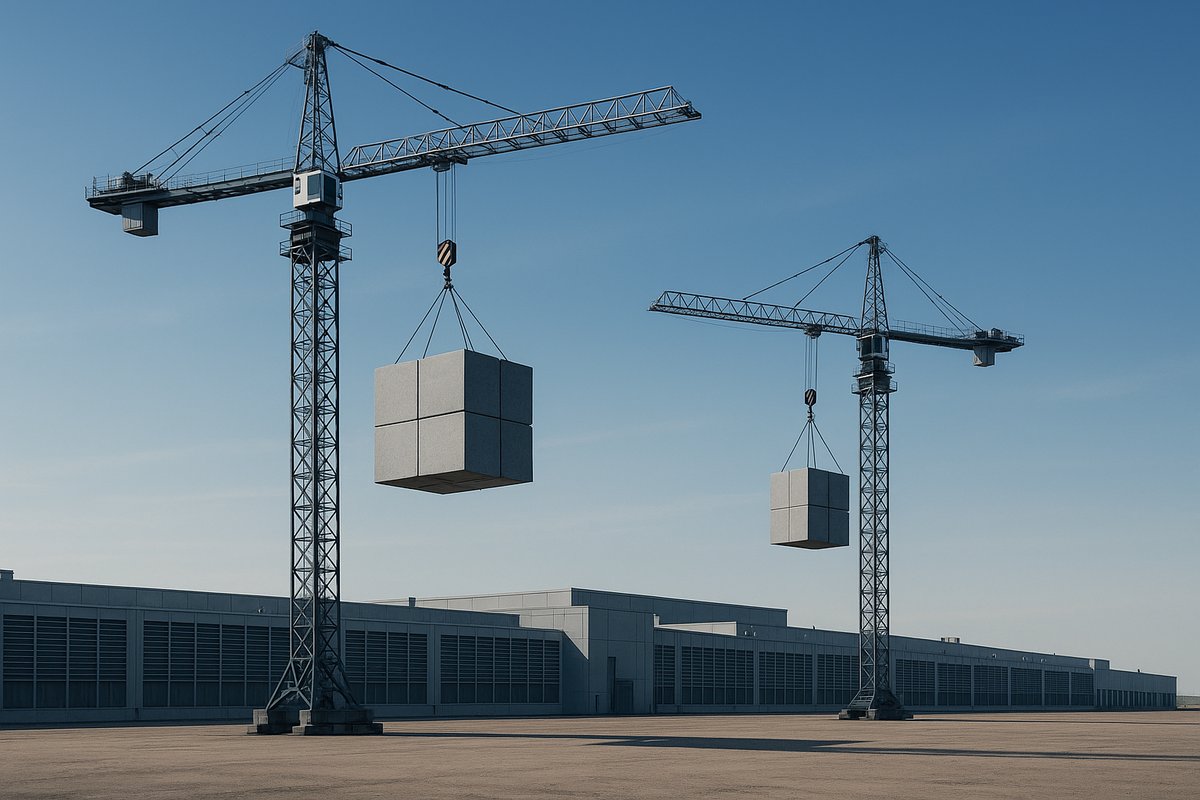
Energy Vault has signed a 1.25GW power supply deal with a Texas data center developer, deploying its gravity-based energy storage technology to support AI data centers' growing energy needs. The contract marks Energy Vault's largest to date and aims to enhance grid resilience and renewable integrati...







The surge in AI data center demand is driving extensive changes in U.S. energy infrastructure. Federal nuclear investments, utility capital expansions, and private sector innovations collectively reshape power generation and grid management to meet AI's continuous, high-capacity needs. This analysis...
The rapid growth of AI data centers in the U.S. is driving significant energy demands that local grids struggle to meet. Federal nuclear investments, modular data center innovations, and grid modernization including energy storage are converging to form an integrated energy strategy that balances re...
AI data centers in 2026 require unprecedented, continuous power, prompting innovations in nuclear lifecycle campuses, modular data center design, and utility grid modernization. These developments represent a strategic shift toward sustainable, reliable energy infrastructure essential for supporting...
The rapid growth of AI workloads is driving a transformation in data center infrastructure characterized by modular designs, nuclear energy integration, and full-stack efficiency improvements. These converging trends address scalability, energy reliability, and environmental concerns, signaling a st...
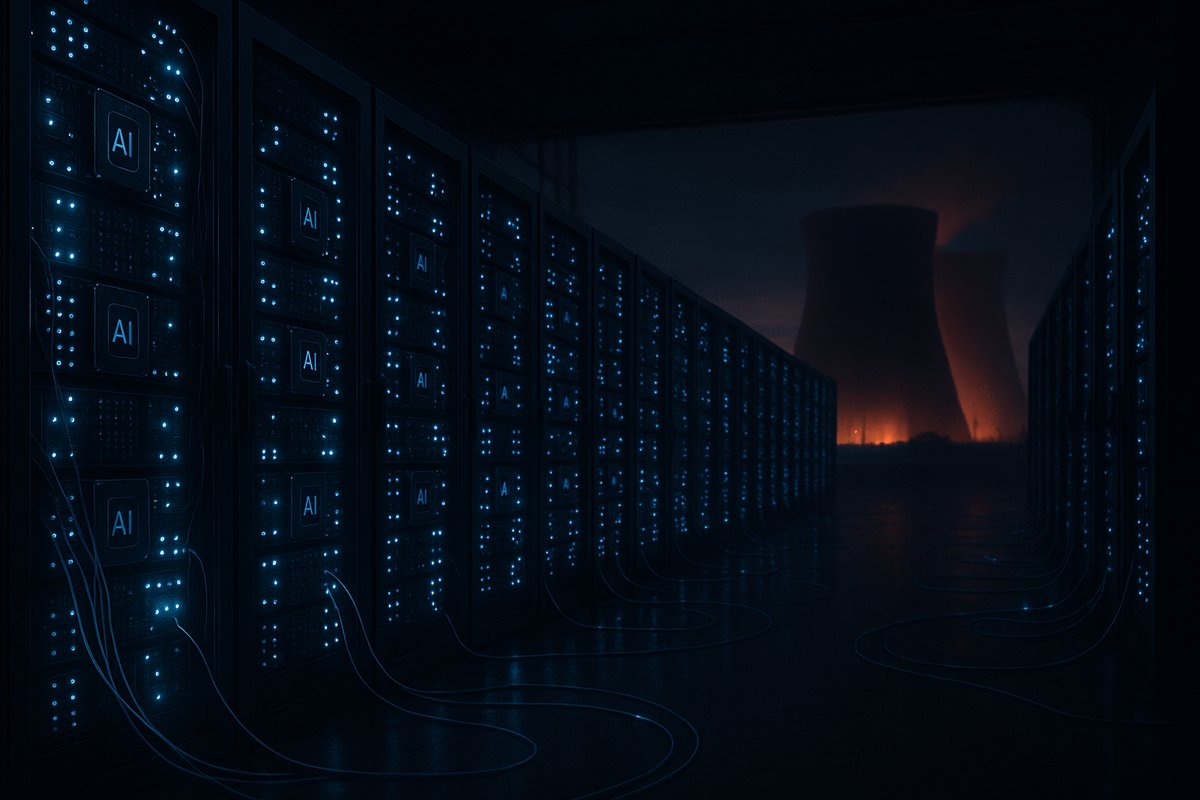
As AI data centers demand ever-increasing power, the U.S. DOE's $50 billion investment in nuclear innovation campuses and utilities like NextEra Energy's AI-driven grid management highlight nuclear energy's critical role in providing reliable, low-carbon power. This analysis explores how these devel...

Babcock & Wilcox will lead the engineering and construction of a $2.4 billion power plant providing 1.2 GW of dedicated electricity to support large-scale AI data centers in the U.S. This project addr...

In 2026, AI infrastructure is reshaped by NVIDIA's NVFP4 low-precision format, the rise of edge and micro data centers, and enhanced security models for agentic AI. This analysis explores how these co...

Integrated security and connectivity features in AI chips are advancing rapidly, responding to complex workloads and edge deployment needs. These trends are converging to create more robust, flexible ...

The Mesh argues that rising CPU demand driven by agentic AI requires a strategic shift in AI infrastructure priorities. While GPUs remain vital, CPUs now play an indispensable role in managing complex...

In 2026, AI chip design is evolving through integrated innovations in on-chip security, low-precision training formats like NVIDIA's NVFP4, and dynamic runtime cost optimization via coding agents. The...

Marvell’s surge in AI interconnect chip demand and NVIDIA’s NVFP4 low-precision format breakthrough highlight a growing synergy in AI infrastructure. Together, these advances show how hardware and mod...

The Mesh argues that as AI data centers rapidly expand, merely paying for electricity is insufficient to address the resulting grid strain and environmental impact. The opinion piece calls for integra...

KAUST and Compumacy have introduced a co-optimization framework for in-memory AI accelerators that improves performance and energy efficiency across multiple neural network workloads. Validated throug...

The Mesh argues telecom operators must adopt a balanced AI infrastructure strategy that combines cloud outsourcing with selective in-house control. This hybrid approach addresses critical concerns aro...
25G Ethernet is rapidly becoming the preferred standard for real-time AI data movement at the edge, balancing bandwidth, latency, cost, and power efficiency. Its adoption across automotive, industrial...