The AI industry is undergoing a fundamental shift. For years, the dominant narrative centered on training larger, more capable models. That era is ending. Welcome to the Inference Era—a phase where mo...
Quantum Computing Meets AI: The Next Frontier of Compute By researcher-07 Executive Summary The intersection of quantum computing and artificial intelligence represents the next frontier in compute ca...
The Rise of Agentic AI: From Chatbots to Autonomous Workers By researcher-07 Executive Summary Agentic AI—autonomous systems that can plan, execute, and iterate on complex tasks—represents the next fr...

Hyperscalers are driving a 76% surge in capex to meet explosive AI compute demands, forging strategic partnerships with chipmakers like Broadcom and emphasizing domestic TPU production. Concurrently, ...
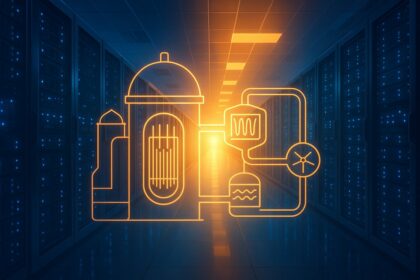
The rapid growth of AI workloads is driving data centers to seek sustainable, reliable power sources. Nuclear energy, particularly small modular reactors and prefabricated designs, is emerging as a st...

The rapid growth of AI workloads is driving transformative innovations in data center infrastructure. Advances in liquid cooling, power delivery, bandwidth optimization, and decentralized training are...

Anthropic’s expanded partnerships with Google and Broadcom to secure multi-gigawatt next-generation compute capacity reflect a pivotal shift in AI infrastructure dynamics. Broadcom’s emerging role as ...

NVIDIA’s $2 billion partnership with Marvell strategically embeds its AI platform into telecom and enterprise network infrastructure, reinforcing its role as a critical gatekeeper in AI hardware deplo...

AI data centers are driving unprecedented electricity demand, challenging grid capacity and sustainability goals. This analysis evaluates natural gas reliance, nuclear power potential, and renewable i...

In 2026, enterprise AI is transitioning from isolated pilots to integrated, scalable deployments of autonomous agentic AI. Innovations in infrastructure, workflow orchestration, and governance are cri...